
Artistic Director Editorial
Nadia Meflah
When I was asked to choose a photograph to introduce myself as the new Artistic Director of the Algiers International Film Festival, I hesitated for some time. I was convinced that the image we have of ourselves is, above all, shaped by our relationship with others — and therefore with the world — where perception is also a matter of ethics and commitment.
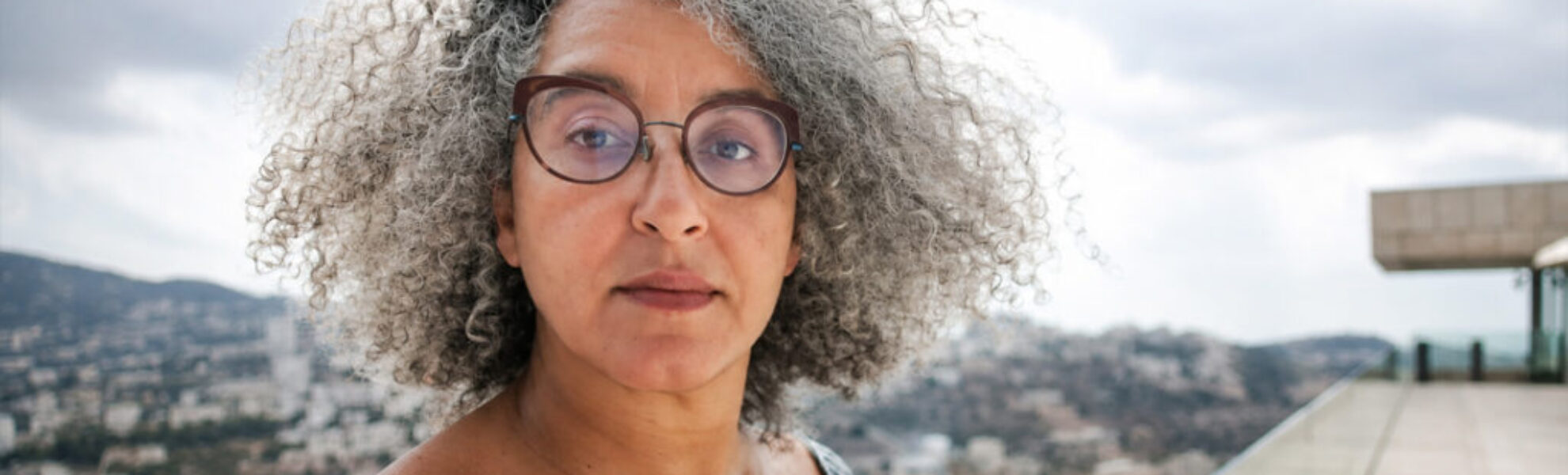
Then I had a moment of clarity: I went back to an self-portrait I had taken in Palestine, when I was invited to the Ramallah International Film Festival in October 2019.
Today, as a film professional, I feel an even greater responsibility to stand in support of our brothers and sisters in Palestine, as well as all those who struggle to preserve a history, a people and a memory.
This is the commitment I wish to place at the heart of the Algiers Festival: to make it a space that supports cinematic creation from every country in the world committed to universal humanism, to the defence of creative freedom, memory and dialogue among peoples.
To me, this ambition fully embraces a public-service mission: to offer Algerian citizens a cinema that is open to the world, attentive to the struggles of our time, and to make the Festival a place for encounters, transmission and solidarity.
The excellence of Algerian cinema is rooted in a fierce determination to break free from every imposed identity and every assigned place, and it has been so since its very beginnings. Algerian films, past and present, share a common quality: they offer the world an aesthetic power inseparable from a genuine beauty of insurrection.
How can we tell the story of a human condition when the struggle for survival itself becomes its first condition? How can we portray a social, political, economic and cultural life subjected to a colonial system that claims legitimacy in the name of a so-called civilising mission? What can storytelling achieve when a war of occupation continues to endure and intensify?
No one can evade these questions today. They run through many recent films with tragic force — Palestinian films, of course, but not only Palestinian films.
Filmmakers who commit themselves as awakeners of conscience are at home in Algiers. More than ever, we must strengthen our ties with those who are committed to dismantling the legacies of colonialism and the toxic, destructive narratives that perpetuate their effects. We must support those who reclaim their stories, give voice to the plurality of their histories, cultures and identities.
It is this legacy that we now have a responsibility to carry forward and take further: to make Algiers a major centre of world cinema, a place where artists from every horizon, driven by freedom, justice and solidarity, can come together.
A cinema that does not turn away from the world, but chooses to look it in the face, to question it and, perhaps, to help transform it.
Photo Nadia Meflah : Autoportrait – Ramallah, Palestine 2019