
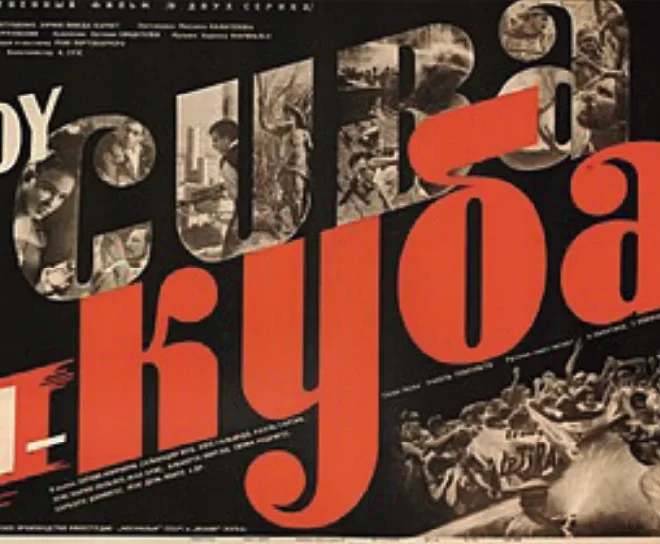
Soy Cuba is not a film, it’s a trance. Shot in 1964 by the Soviet Mikhail Kalatozov with almost insolent freedom, this Cuban-Soviet co-production project superbly celebrated the Cuban Revolution.
It is a magnificent cinematic object where the genius of the Soviet Kalatozov gave free rein to his talent, to the extent that his film, little valued upon its release, became a model for Scorsese, Coppola, and an entire generation of filmmakers thirty years later.
A Technical Orgy That Still Makes Today’s Drones Blush
Forget special effects! Everything is done the old way, with a camera on the shoulder, artisanal cranes, and a daring that borders on pure madness. Sergey Urusevsky, the director of photography, delivers one of the greatest feats in the history of cinema here. Single-shot sequences lasting several minutes cross crowded hotel floors, dive into a swimming pool, fly over sugar cane fields, or follow a funeral procession through the streets of Havana as if the camera were floating in the air. The black and white is heartbreakingly beautiful, almost carnal; the light sculpts faces, smoke, sweat, and the sea with a tragic sensuality.
People often talk about the famous shot of the hotel terrace that descends to the pool, passing over the parasols: sixty years later, it remains one of the most beautiful achievements ever accomplished without a digital safety net.
Four Novellas, One Single Voice: Cuba Itself
The film is structured into four episodes linked by the island’s voice-over (« Soy cuba – I am Cuba »), whispered with lyrical fervor. We follow a young woman exploited in the tourist bars of Havana, a peasant burning his sugarcane in the face of expulsion, rebellious students, and finally, the guerrillas in the Sierra Maestra. The message is crystal clear.
Yesterday’s Failure, Today’s Legend
It was a flop upon its release. It was judged too sophisticated for the socialist realism of the time, too « Russian » for the Cubans, too long, and too slow. The film disappeared into cellars for decades. It took Martin Scorsese and Francis Ford Coppola stumbling upon it by chance in the 90s for it to be restored and become the cult object it is today.
Even if Communism seems like old history today, the political message has not aged a bit. The struggle of the people always pays off, and just causes undeniably triumph. Soy Cuba is not a film to be understood; it is a film to be felt. A visual symphony, a sensory trip, a plastic slap that leaves you speechless.
Fans of cinema that invents its own rules will not emerge unscathed.
An absolute masterpiece.