
NEWS








Egyptian Producer Mohamed Khaled: The Girls and Their Enthusiasm Are Behind “Rafaat Einy Lel Sama” (The Girls Who Looked at the Sky)
Egyptian Producer Mohamed Khaled: The Girls and Their Enthusiasm Are Behind “Rafaat Einy Lel Sama” (The Girls Who Looked at the Sky)
Q: What attracted you to the idea of the film “Rafaat Einy Lel Sama” to produce it?
I worked in development for five years before entering the field of production, and working in development means constantly moving between governorates and different places in Egypt. What truly motivated me were the girls, because they have a powerful energy that surpasses all of ours. They reminded me of myself during adolescence, and I saw myself in them, and I saw the image of my friends in other governorates who wanted to come to Cairo to get an opportunity. There was immense enthusiasm, and the girls’ talent, cleverness, and rapid development were essential factors in motivating the team, which filmed for four years.
Q: The film portrays a secluded Christian community. Did you face difficulties filming there for four years?
Not at all. There were no problems whatsoever. We have large numbers of Christians, and the fact that the girls were Christian happened by chance. The village itself includes large areas where Muslims live normally. It is true that the percentage of Christians there is high, but we were not preoccupied with being in a Christian village as much as we focused on studying the Christian religious culture in Upper Egypt (the Sa’id region). As a Muslim, I was very much enjoying entering Christian places in Egypt and learning about new customs and traditions. We personally enjoyed this experience, and we did not face any problems at all.
Q: Can the film be classified as a feminist work?
The film encompasses everything. From the perspective of the girls, it is indeed a feminist film. From the perspective of those who have a dream of working in art, it reflects their dreams, and each of them might see themselves in it. And whoever watches the film and recalls their image in their childhood will also find what represents them. But certainly, there is a clear feminist character, because the troupe is made up of Christian girls, and therefore the film carries a feminist element. I believe that if it were a group of boys, they would not have faced the problems the girls experienced. Therefore, it can be said that a large part of the film is directed at the female community.

Filmmaker Hanna Attallah: « The Palestinian narrative is alive and defies distortion »
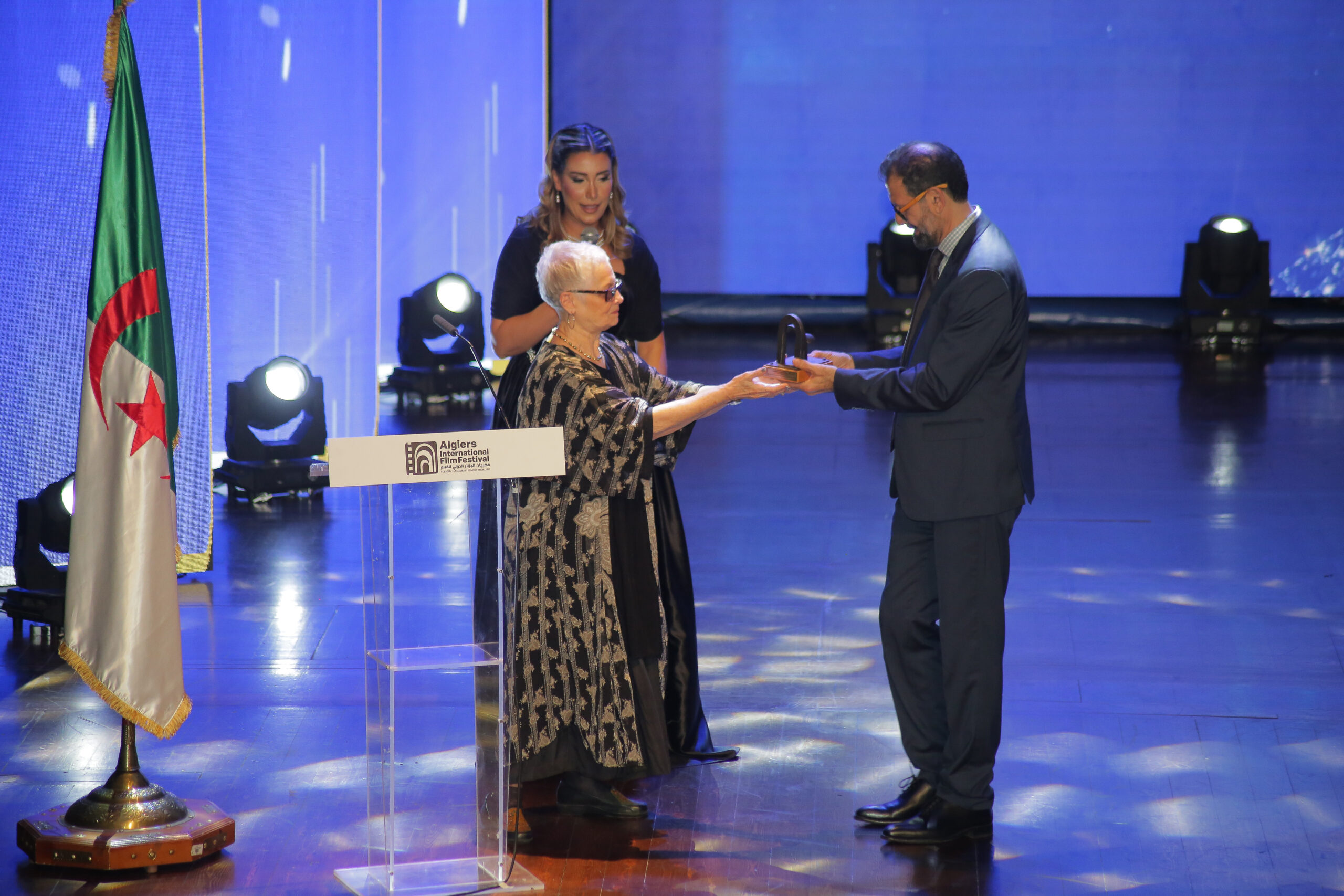
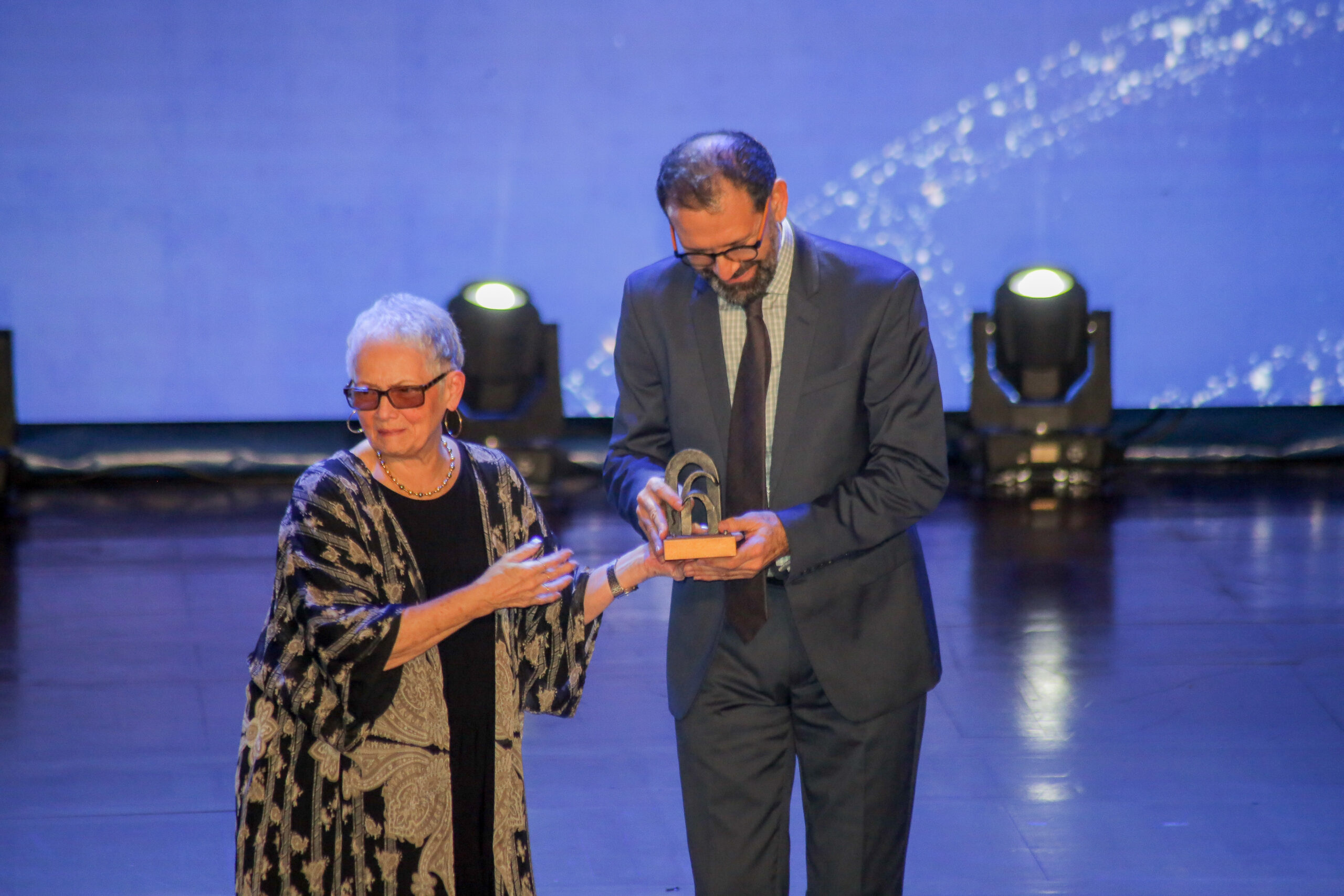
The Algiers International Film Festival (AIFF), at the close of its 12th edition, honors Palestinian filmmaker Hanna Attallah, founder and artistic director of « Filmlab Palestine. »
Since its launch in 2014, the institution has continued to expand its activities, programs, and vision, including capacity development, production support, and co-production. It also founded « Palestinian Cinema Days, » which has become an international festival attracting premiere screenings of notable films. In addition, Filmlab Palestine pays great attention to training the new generation through workshops aimed at children, while simultaneously seeking to strengthen and document the narrative of the indigenous people who hold the right to the land. Its ambition extends beyond the limits of individual film production to reach the construction of a complete and sustainable Palestinian cinematic ecosystem, encompassing production, screening, audience development, and the development of necessary infrastructure.
1/ After 25 years, you return to Algiers as an honoree. How do you describe your feeling about this return, and what impact did your Algerian experience have on your artistic vision of cinema?
Indeed, I remember my visit to Algeria, I think in 1999 or 2000, during the Tebessa International Festival. At that time, I was still a student at the Higher Institute of Cinema at the Academy of Arts in Egypt. My third-year graduation project was screened at the Festival, and I was present to follow the event. Before moving to Tebessa, we spent two days in Algiers and stayed at the « El Djazair » hotel, where this stay brought back memories of my student days and our enthusiasm as cinema students.
The honoring by Algeria and the Festival is a great honor and a wonderful surprise, not only for screening my project but because the Festival united us with the cinema of revolution and struggle, just as it brought together Palestinian and Algerian cinema. I felt a shared consciousness among us as Palestinian filmmakers, and that this experience represented a part of the Algerian struggle in cinema and art. There were many similarities between our experiences, both artistically and politically, which made the trip a rich and deeply impactful experience for me.
2/ How do you view the role of cinema in strengthening resistance and safeguarding the Palestinian narrative for future generations?
The Palestinian cause is a humanitarian cause par excellence, and any liberal and humane person supports it. That is why, in the seventies, there were many international directors who participated in forming what we can call Palestinian cinema during the time of the PLO, including Jean-Luc Godard from France, in addition to directors from Algeria, Japan, and other countries, who worked with Palestinians to produce images, documentation, and convey the Palestinian narrative to the world.
Currently, the image has become the weapon of the era, especially with the spread of social media, and with the presence of continuous attempts at distortion practiced against Palestinians and their cause, and even against Palestinians as individuals. If we look at Western cinematic production, we find that the Palestinian image is often outside the scope of direct control, which makes the production of our own narrative a vital necessity.
What is happening in Gaza today and the genocide being practiced there, and its globally circulated events, is what has formed a global movement and contributed to demonstrations and initiatives supporting the cause, which has been strengthened by the support of Arab and international directors who are still producing films about the issue, such as the closing film of the Algiers International Film Festival, « The Voice of Hind Rajab » by Tunisian director Kaouther Ben Hania. A large part of this solidarity is represented in producing the image and understanding the importance of the narrative and the necessity of keeping it alive. Preserving this narrative constitutes an essential part of the conflict, and it is the way we ensure the transmission of collective memory to future generations, so that the journey of struggle continues and the Palestinian narrative remains alive and renewed.
3/ After the « Al-Aqsa Flood, » the Palestinian cause witnessed an unprecedented historical shift. Do you believe that world cinema will keep pace with this transformation and reflect the true narrative of the Palestinians?
The war of genocide in Gaza exposed the world and revealed the illusion we lived under regarding human rights and international institutions, which failed to protect freedoms or the rights of children and women as expected. Despite the heavy price paid by the people of Gaza, world cinema began to turn its attention to the Palestinian cause, with the participation of Hollywood stars and the production of films such as « The Voice of Hind Rajab »—supported by Brad Pitt—and Cherien Dabis’s latest film, « The Remainder » (The Rest of You), and Annemarie Jacir’s new film, which opens hope for changing the global perspective.
Today, the main battle has become a battle of images, as some parties try to invert and distort the narrative, making the preservation and transmission of the Palestinian narrative with neutrality and depth vital. The richness of Palestinian cinema stems from the diversity of experiences, from directors inside and outside Palestine, from Jerusalemites and the 48 territories, such as Elia Suleiman, and female directors like Maha Haj from the West Bank, which reflects the Palestinian cause from different angles and provides a comprehensive and realistic narrative for future generations.
4/ Filmlab Palestine can be considered a form of steadfastness, documentation, and resistance. To what extent have you succeeded in achieving the goals you set when the project was founded?
Sometimes I feel that we have achieved more than we expected. At the time we decided to postpone the Palestinian Cinema Days in Palestine, we launched the festival around the world to confront the complete distortion of the truth, especially towards the new generation who are unaware of the extended 75-year conflict. In the first year, we presented about 100 screenings, and in the second, the number reached 300. As for this year, the number of screenings reached 1,043 showings in one day around the world. The film programming included new and important films such as « Divine Intervention, » « Tale of the Three Jewels, » « Jenin, Jenin, » and « When I Saw You, » where each film focuses on a specific issue of the Palestinian conflict, to provide a comprehensive and multi-dimensional narrative of the cause. Our primary focus today at Filmlab Palestine is to prepare a generation that possesses awareness and is intellectually and cinematically cultured

« Mashiyat Al Ghurab » (The Crow’s Walk) by Director Khaled Ben Tbal: A Call to Preserve Ancestral Heritage
The film portrays the conflict between two generations: one steeped in Western modernity, drawn to technology and driven by self-interest; the other rooted in tradition, the land, and ancestral wisdom. These two worlds collide during a journey deep into the desert.

Mediator, Educator, and Subtle Master… Kamel Mekesser, the Craftsman Who Gives Voice to Images
He is one of those shadow artisans without whom films would not breathe, vibrate, or simply live. Kamel Mekesser belongs to that rare lineage—the sound engineers who sculpt the invisible and give soul to images. For nearly fifty years, his name has quietly appeared in the credits of Algerian, Egyptian, French, and international masterpieces. Yet behind this modesty hides one of the greatest sound architects of the Arab world.
It all began in the 1970s. A student of science, passionate about physics and mathematics, Kamel Mekesser spent as much time in university lecture halls as at the Algerian Cinémathèque, cultivating his eye for a future as a technician. A call for applications published by the RTA changed the course of his life. He was admitted and directed toward the “acoustic physics” program, a discipline at the intersection of his passions: scientific rigor and the magic of cinema. Sound then became his language, his profession, and very quickly, his destiny.
After barely two years of training, in 1976, he was dispatched to Egypt to work on Youssef Chahine’s film The Return of the Prodigal Son. The master was astonished to see this young Algerian arrive with equipment that no Cairo set had yet seen: a Nagra 4.2, Beyer M160 microphones, and an ultra-rigorous working method.
From that moment on, Kamel Mekesser’s reputation continued to grow. With surgical precision, absolute listening, and an innate musical sense, he imposed an exacting standard on every set, elevating the films and impressing directors. His name appears on over sixty feature films, including cornerstones of Maghreb and Arab cinema such as Omar Gatlato (1976), Nahla (1979), Radhia (1991), Touchia (1992), La Maison jaune (2007), Les Jours de cendre (2013), Le Sang des loups (2019)… Each film became for him a space for exploration, a sound architecture to craft, a world to bring to life.
But Kamel Mekesser is not only an outstanding technician. He is a mediator, an educator, a subtle master. For more than thirty years, he has trained future professionals of Algerian television, imparting not only techniques but a true ethic: respect for sound, patience, precision, and listening in its deepest sense. Teaching, for him, is not a secondary act but a duty, a way to extend the life of a craft he considers an art.
What makes Kamel Mekesser unique is his relationship to reality. For him, a film is not just heard—it is breathed, felt. A voice too loud can crush an emotion. A poorly captured silence can erase a truth. A misrecorded step can betray a character. He captures the rustlings of the world as others sculpt light. In this patient, almost artisanal gesture, he inscribes an essential part of the memory of Algerian cinema.
Today, his name remains one of the most respected in the Maghreb audiovisual landscape. Through his films, his students, and his years of dedicated work, Kamel Mekesser has achieved what few technicians manage: a sonic signature that is recognizable, sensitive, and intensely human.
Because a great film sometimes begins with a just voice, a mastered breath, a perfectly captured silence. And because behind every emotion felt in a darkened theater, there is often the invisible work of a man like him.
Kamel Mekesser, the goldsmith of sound, has given the seventh art what cannot be seen… but is never forgotten.

Activist singer, icon of resistance… Haiyu, vibrant portrait of Mariem Hassan: A Voice for a Free Sahara
Presented as part of the Algiers International Film Festival, Haiyu pays tribute to one of the great voices of Western Sahara: Mariem Hassan, an activist singer, icon of Sahrawi cultural resistance, and a major figure in the desert blues movement. Through this film, an entire aspect of memory, struggle, and identity is revealed, carried by the profound spirit of a people in search of freedom.
Haiyu follows the journey of this exceptional artist, born in a territory marked by exile and conflict. Mariem Hassan’s music—powerful, deep, infused with both pain and hope—becomes the gentle weapon of a people who refuse to be erased. Her warm and luminous voice transports the audience to the heart of the Sahara, where songs become testimonies, where poetry recounts what History often overlooks.
The film focuses not only on retracing her artistic path but also on revealing the woman behind the legend: resilient, free, sometimes vulnerable, but always standing tall. Blending archival footage, concert performances, personal accounts, and cross-referenced perspectives of those who knew her, Haiyu creates a humanist, deeply intimate narrative. It shows an artist who transformed her art into a manifesto, giving substance and voice to a cause that some would prefer to see disappear in silence.
By choosing to screen this film, the Algiers International Film Festival highlights a work of memory and dignity, recalling the fundamental role of culture in contemporary struggles. Haiyu is not just the portrait of a musician: it is a cry, a song of defiance, a tribute to all those who, in the sand and the wind, continue to dream of a free Sahara.
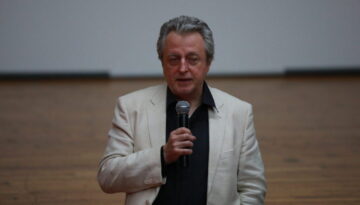
Pablo César, Argentine filmmaker: »Algeria holds an essential place in the African imagination. »
Met at the end of the screening of his feature film Après la fin, Argentine filmmaker Pablo César discusses in this interview the genesis of his project. Having already produced several co-productions with African countries, he shares his idea of making a film about the city of Oran, which has a historical link with a namesake city in Argentina.
What was the starting point for the film Après la fin?
I met the actress during the COVID-19 pandemic. We couldn’t meet in person, and I heard a recording of her reciting poems; they moved me deeply. I contacted her, and she told me she was too old to start a career in cinema. She had never acted before, and she made her first film with me at the age of 88. This might be a first in the history of feature films.
You are thinking of making a film about the city of Oran, which seems to have a connection with a city of the same name in Argentina. Can you tell us more about it?
Indeed, I am thinking of writing a film about the city of Oran, because there is a city in the Salta province of Argentina that bears the same name, with a slight accent on the “a,” but pronounced the same way. There is a rich history concerning Muslims who lived there, including Pieds-Noirs. I have read many stories about the city of Oran in Algeria, and I have a friend who was born there. I am considering making a film to show the two Orans in a fictional narrative, creating a cultural bridge between the two countries.
What was the greatest artistic challenge in making the film?
We had to find actresses to play the roles at ages 10, 16, and 40. Three different actresses had to bear a resemblance, of course, requiring a tremendous amount of direction for the young actresses so they could embody the character fully.
What challenges do you face in financing and distributing independent, poetic cinema in today’s global landscape?
In Argentina, cinema is going through a very difficult period, as the country has lost many opportunities due to currency devaluation. Government grants for film production have significantly decreased over the past decade.
You have made 18 feature films, half of them co-productions with African countries. Why are these collaborations important to you?
I have done many co-productions with African countries because I feel African. At the 12th AIFF, as part of the South-South panorama, I am presenting a documentary titled Maconge, la Córdoba africaine, referring to the city of Córdoba in Argentina, where traces of the African population that was enslaved during the colonial period still remain. I look for connections between Argentina and Africa through the traces left in our societies.
Everyone believes that Argentina has no relation to Africa, yet if you look closely, you find many links. For example, African artists from Montevideo and Buenos Aires contributed to the creation of tango music and dance. I began co-producing with Tunisia in 1990, then with Cape Verde, Namibia, and many other countries.
What difficulties do you encounter when setting up South-South co-productions, and how do you overcome them?
Co-production is increasingly difficult due to Argentina’s economic situation. Yet it remains a great solution for independent cinema. Everything depends on the choice of the producer and their commitment to supporting a film. It is also important to know that most African film co-productions are with European countries, especially France, and very few with Latin America. Yet the ties between our continents are incredibly numerous, and we share many similar histories.
What do you know about Algerian culture and cinema?
Algeria occupies a very important place in the African imagination, first for its glorious Revolution and its hard-won freedom. The film The Battle of Algiers (1966) made Algeria known worldwide and secured it a prominent place in African cinema.
You have been teaching at the University of Cinema in Buenos Aires since 1992. How has your African experience influenced your teaching?
My experience in Africa has greatly influenced my pedagogical journey. The magic of the continent and its enchanting natural landscapes deeply marked me. Its historical and sociological richness led me to rediscover auteur cinema, oral culture, millennia-old heritage, and the great wisdom present in all corners of the continent.
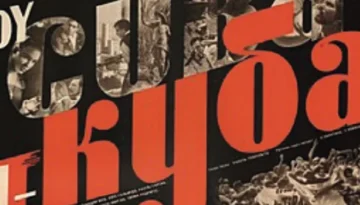
Released in theaters in September 1964: Soy Cuba (I Am Cuba): When Revolution Dances with the Camera
Soy Cuba is not a film, it’s a trance. Shot in 1964 by the Soviet Mikhail Kalatozov with almost insolent freedom, this Cuban-Soviet co-production project superbly celebrated the Cuban Revolution.
It is a magnificent cinematic object where the genius of the Soviet Kalatozov gave free rein to his talent, to the extent that his film, little valued upon its release, became a model for Scorsese, Coppola, and an entire generation of filmmakers thirty years later.
A Technical Orgy That Still Makes Today’s Drones Blush
Forget special effects! Everything is done the old way, with a camera on the shoulder, artisanal cranes, and a daring that borders on pure madness. Sergey Urusevsky, the director of photography, delivers one of the greatest feats in the history of cinema here. Single-shot sequences lasting several minutes cross crowded hotel floors, dive into a swimming pool, fly over sugar cane fields, or follow a funeral procession through the streets of Havana as if the camera were floating in the air. The black and white is heartbreakingly beautiful, almost carnal; the light sculpts faces, smoke, sweat, and the sea with a tragic sensuality.
People often talk about the famous shot of the hotel terrace that descends to the pool, passing over the parasols: sixty years later, it remains one of the most beautiful achievements ever accomplished without a digital safety net.
Four Novellas, One Single Voice: Cuba Itself
The film is structured into four episodes linked by the island’s voice-over (« Soy cuba – I am Cuba »), whispered with lyrical fervor. We follow a young woman exploited in the tourist bars of Havana, a peasant burning his sugarcane in the face of expulsion, rebellious students, and finally, the guerrillas in the Sierra Maestra. The message is crystal clear.
Yesterday’s Failure, Today’s Legend
It was a flop upon its release. It was judged too sophisticated for the socialist realism of the time, too « Russian » for the Cubans, too long, and too slow. The film disappeared into cellars for decades. It took Martin Scorsese and Francis Ford Coppola stumbling upon it by chance in the 90s for it to be restored and become the cult object it is today.
Even if Communism seems like old history today, the political message has not aged a bit. The struggle of the people always pays off, and just causes undeniably triumph. Soy Cuba is not a film to be understood; it is a film to be felt. A visual symphony, a sensory trip, a plastic slap that leaves you speechless.
Fans of cinema that invents its own rules will not emerge unscathed.
An absolute masterpiece.
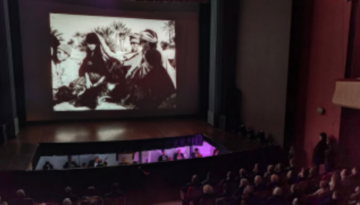
Special Screening – Les Plongeurs du Désert by Tahar HannacheThe Well, the Machine, and the Future
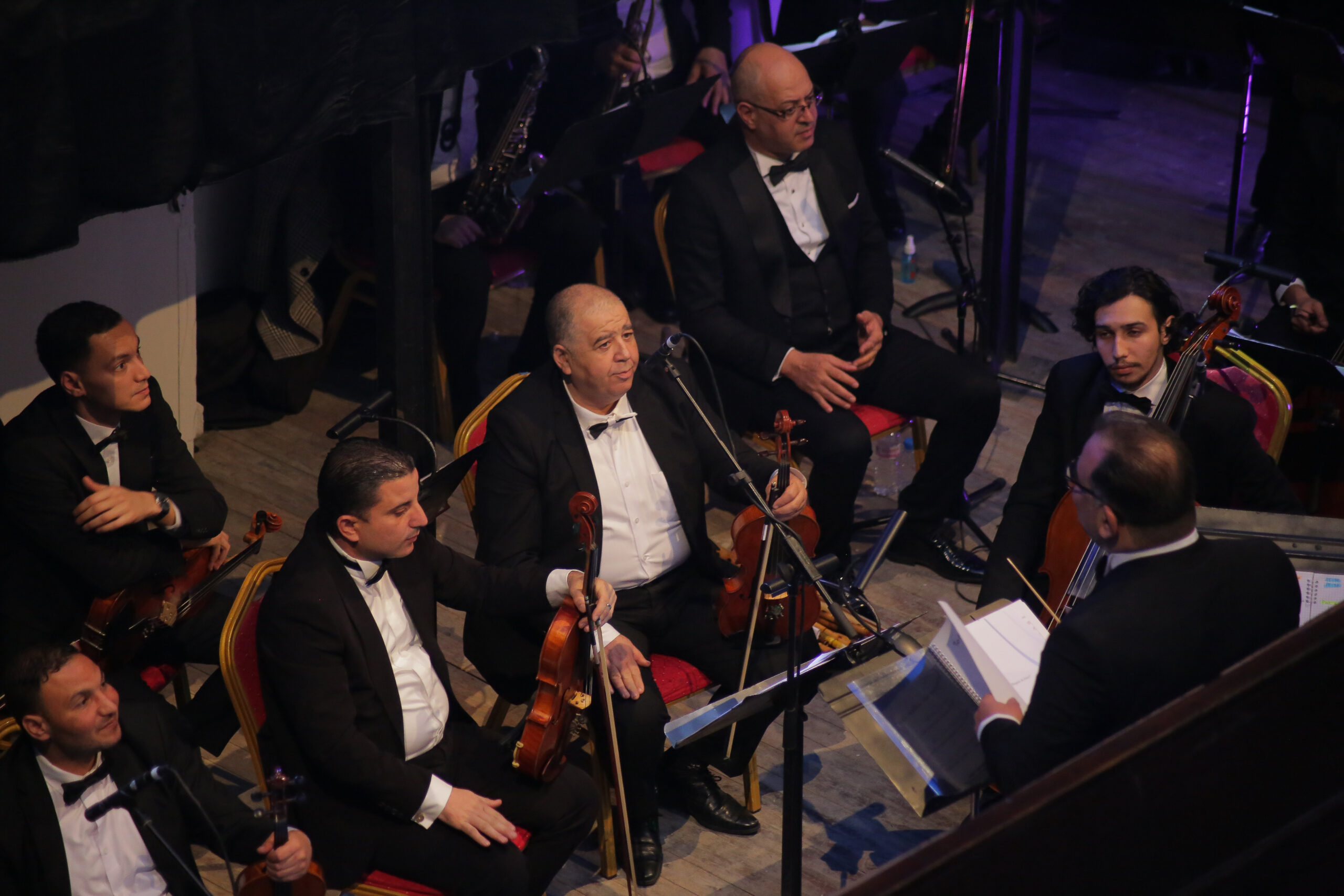
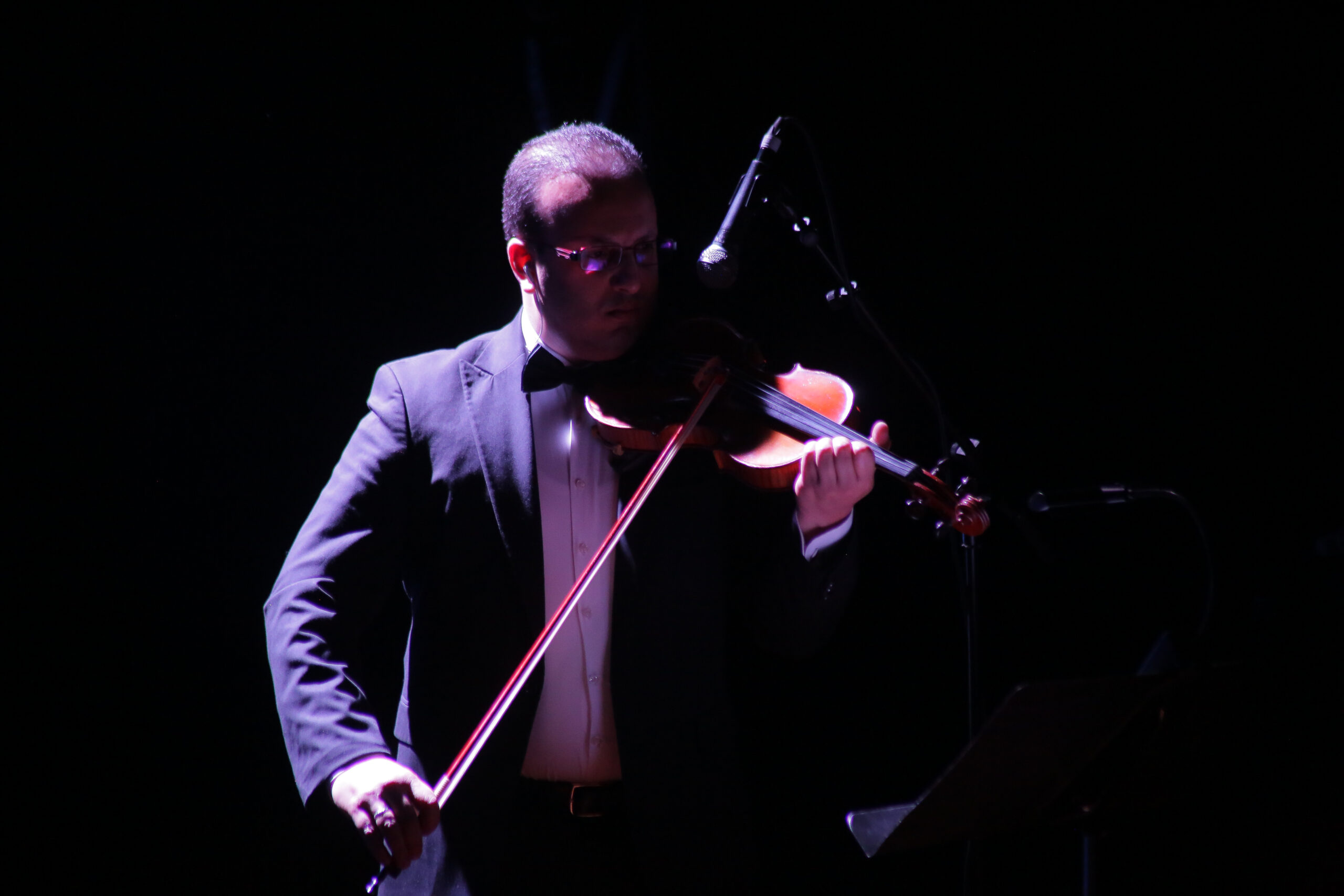
Directed in 1952 by Tahar Hannache, Les Plongeurs du désert is considered the first entirely Algerian fiction film—produced, directed, and performed by Algerians. This pioneering work was presented as part of a cine-concert at the Algerian National Theatre during the opening night of the twelfth edition of the Algiers International Film Festival (AIFF). Shot in Tolga, in the Biskra province, Les Plongeurs du désert features Himoud Brahimi (Momo) as Cheikh Ali and Djamel Chanderli as his son Mansour, alongside many local extras. The story tells the simple yet moving tale of an oasis community whose vital well has run dry. Through their leader, the villagers call upon renowned “desert divers,” skilled and respected men specialized in clearing wells buried under sand and mud. Their patient and methodical work brings water back to the surface, saving both the oasis and its people. The village rejoices, and nature flourishes again.
But many years later, the machine appears—arriving with its noise, its promises, and its blind strength. Modernity imposes itself without asking anyone’s opinion, as though it were inevitable, replacing ancestral know-how passed down through generations. The metaphor is clear: the modern world sidelines traditional ways and pushes into the shadows those who carry them. Modernity advances like a steamroller that never looks back. Cheikh Ali grows old and looks toward his son—embodying the future—as if to say that the struggle will belong to the new generation, who must learn to navigate this changing world.
One of the most compelling aspects of the film is its attention to ritual preceding the descent into the well. We see Himoud Brahimi’s character pray, recite incantations, and prepare his body—giving the film an almost anthropological and documentary dimension. Les Plongeurs du désert also powerfully evokes the silent dignity of those who fight for their water, their lives, and their identity.
Today, the film resonates with surprising relevance. We are witnessing a renewed interest in local knowledge, ancestral wisdom, intangible heritage, and the act of transmission. In a world where everything moves fast, memory becomes precious. The cine-concert proved this by pairing the screening with music composed by the great Mohamed Iguerbouchène. Les Plongeurs du désert remains a cornerstone of Algerian cinema history. Seeing it again on the big screen, seventy-three years later, reminds us that Algerian cinema began early—built with modest means but immense conviction, with a desire to exist and to tell the story of a country through its own voices.